
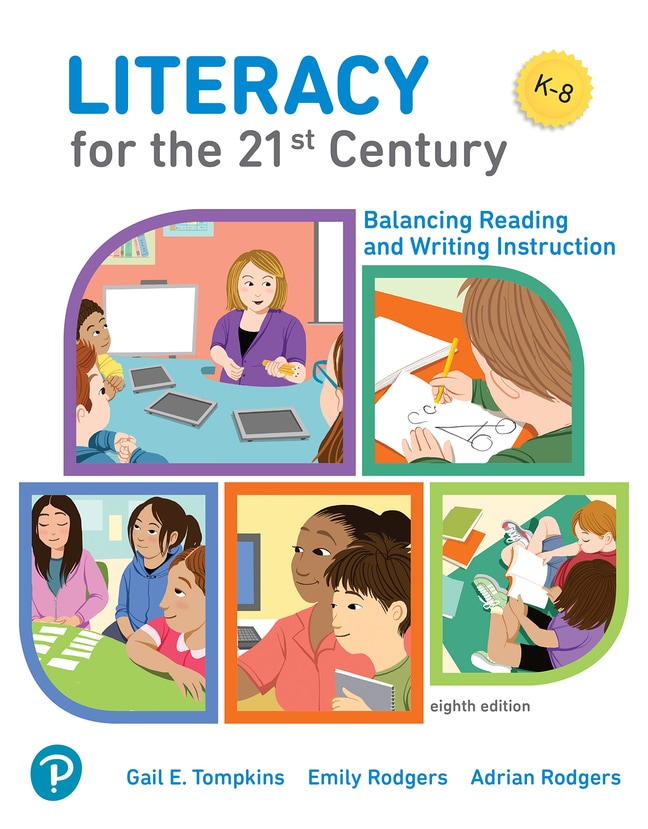
Literacy for the 21st Century: Balancing Reading and Writing Instruction, 8th edition
$24.00
📚 Delivered within 24 hours via email The eTextbook for Literacy for the 21st Century explores teaching reading and writing with a balance of theory and applications. It integrates what we know about teaching reading and writing with ideas that drive the future. The text emphasizes the knowledge teachers need to ensure that their students meet grade-level standards.
For the 8th Edition, longtime author Gail Tompkins is joined by new coauthors Emily Rodgers and Adrian Rodgers, both skilled educators. This title includes the following key features.
Real examples of student work illustrate grade-appropriate literacy development.
The Compendium of Instructional Procedures provides a how-to resource of step-by-step, evidence-based classroom procedures.
Differentiated instruction for diverse learners includes sections on teaching English learners and interventions to help struggling students with different cultural backgrounds.
Literacy development is now integrated into a revised Chapter 2. This will help you build a foundational understanding of how children develop as readers and writers.
Phonemic awareness and phonics content is expanded in a new Chapter 4 to better prepare you for developing phonemic awareness and teaching phonics.
A new Chapter 6: Learning to Spell focuses on stages of spelling development, spelling strategies and spelling assessment.
By illustrating how to teach skills, Literacy for the 21st Century provides the balance of pedagogy and application that you need to become a successful teacher.
Published by Pearson (April 20th 2021) – Copyright © 2022
ISBN-13: 9780135893555
Subject: Reading & Literacy
Category: Literacy Methods (K-8)
Description
Table of Contents
PART 1: UNDERSTANDING AND TEACHING FOR LITERACY DEVELOPMENT
- Becoming an Effective Literacy Teacher
- Examining Students’ Literacy Development
- Assessing Students’ Literacy Development
PART 2: LITERACY DEVELOPMENT
- Cracking the Alphabetic Code
- Developing Fluent Readers and Writers
- Learning to Spell
- Expanding Academic Vocabulary
- Teaching Comprehension: Reader Factors
- Teaching Comprehension: Text Factors
PART 3: LITERACY INSTRUCTION
- Scaffolding Students’ Reading Development
- Scaffolding Students’ Writing Development
- Reading and Writing Across the Curriculum